Keeping an Edge
Maintaining an edge over the market and keeping knives sharp

I am in the middle of writing several pieces right now. There is a memo on the Americold joint venture with EQT, an update on Alexander’s, and a note on a REIT that recently bought back its own shares at a 10% dividend yield. Good writing is hard, and that is precisely why I do it. It is a forcing mechanism and makes me a better investor. But I am setting all of that aside this afternoon to write about something more foundational: what it actually takes to maintain an edge in this business over a long career.
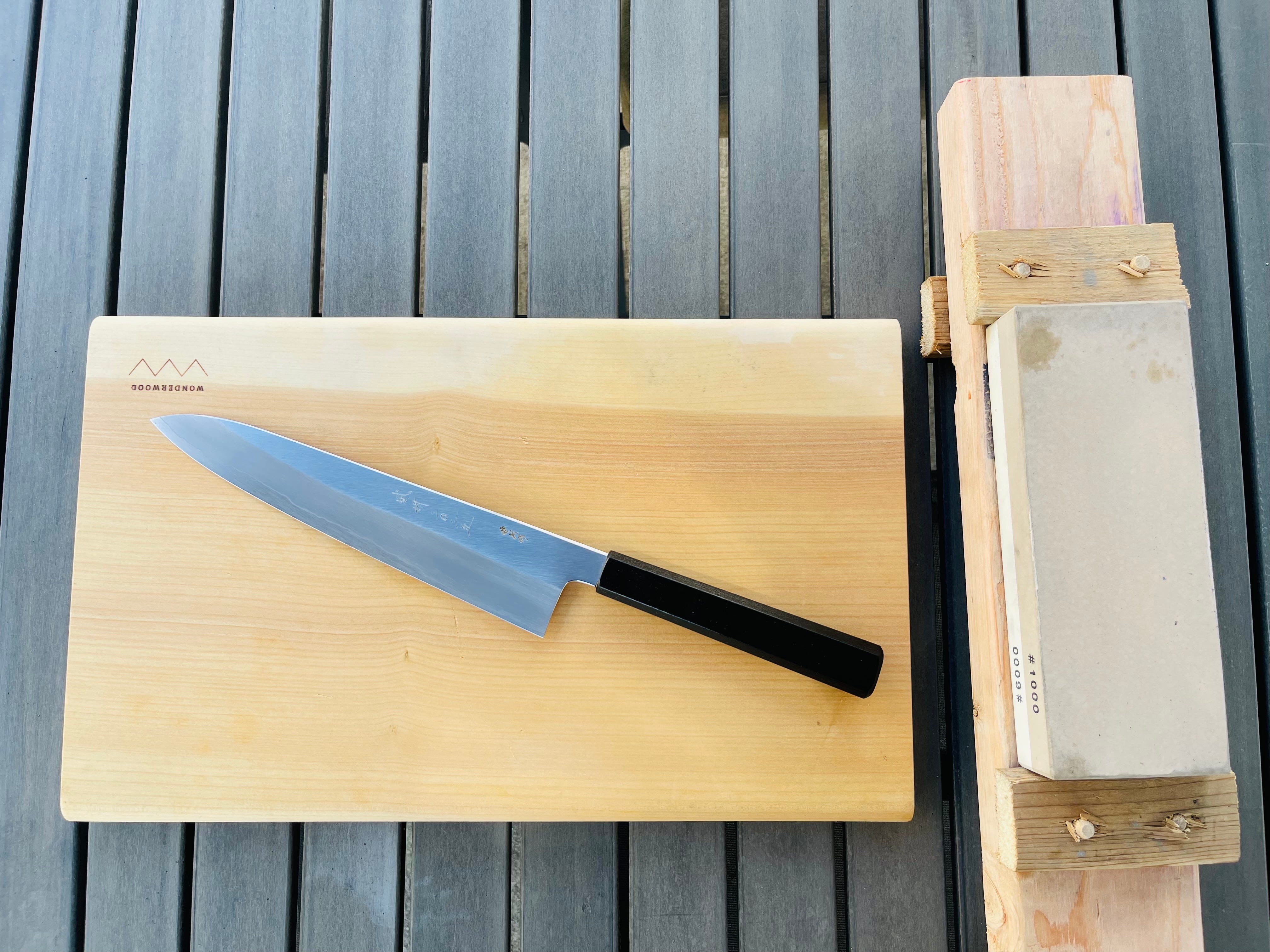
If you cook often, you know that even the finest knife dulls over time. I bought a Japanese chef’s knife in Osaka, the most expensive discretionary purchase I have ever made. It cuts through fatty beef, sashimi-grade fish, and vegetables like they are not even there. But even that knife, if left unattended, will eventually fail you at the cutting board. The analogy for investors is uncomfortable but unavoidable: your edge dulls too. The question is not whether it will happen. The question is whether you continuously monitor and sharpen it when you need to.
Warren Buffett generated extraordinary returns in the 1950s and 1960s by systematically flipping through Moody’s manuals in search of net-net stocks, companies trading below their liquidated asset value. Howard Marks built an early franchise in distressed debt by recognizing that institutional bond holders were forced sellers the moment a credit was downgraded to junk, regardless of underlying value. Joel Greenblatt generated some of the best risk-adjusted returns of his era by exploiting spinoffs, which the market habitually mispriced. Each of these men found an edge that was genuinely theirs. And in each case, the market eventually found them back.
Merger arbitrage, once a reliable source of 20%-plus returns in Buffett’s hands, now generates single digits. Corporations became so aware that value investors love spinoffs that they began deliberately carving off their worst businesses. Credit card transaction data has become commoditized and is no longer the edge it once was. The Yahoo Finance chat rooms where Michael Burry once posted his early ideas are a relic. Even membership in organizations like Value Investors Club, which I have belonged to for years along with Corner of Berkshire and Fairfax, Microcap Club, SumZero, and others, carries less edge than it once did simply because the field of serious competitors has grown. I used to meet up with a group of young talented fund managers and we would talk about investing for hours over pizza and soda. Over time, people got married and moved away. We now chat via Zoom 2-3 times a year. I suspect that Substack will become the next source of an investment edge if one can curate well.
Artificial intelligence deserves a mention too. The best return on time today is developing a real workflow around these tools. The caveat is genuine: if you do not understand first principles, the outputs can be unreliable. But fluency with AI will soon be table stakes in asset management, the same way Bloomberg terminals were a generation ago.
The pattern is always the same: someone finds an inefficiency, exploits it, and eventually the exploitation itself eliminates the inefficiency. The edge erodes. It always does. The only winning response is to keep looking for the next one.
So what actually endures?
The most durable edge I know of is a longer time horizon, paired with an investor base that shares it. This sounds almost embarrassingly simple, but it is genuinely rare. As quantitative strategies, passive indexing, and pod-shop investing continue to dominate capital flows, their collective behavior creates the conditions that patient investors can exploit. Passive allocation buys the largest companies blindly. Pod shops reward positive near-term fundamentals and punish negative ones, often with no regard for valuation. The result is that high-quality businesses experiencing temporary headwinds get sold indiscriminately, and that is precisely where a patient investor with a supportive capital base can do their best work. Your investor base, in many respects, determines whether you can actually execute this strategy or merely admire it from a distance.
Management access, particularly at smaller and underfollowed companies, also remains a lasting source of edge. At a NAREIT REITWeek conference in New York City a couple of years ago, we sat down with several management teams whose stocks were trading at what we considered to be unjustifiably low valuations. Whatever critics were saying publicly on Twitter, we came away thinking these teams were executing competently, allocated capital well, and were themselves frustrated by their share prices. Whitestone was particularly striking. They had quietly reduced leverage and improved occupancy while the market criticized them for not accepting low ball bids. That kind of variant perception only comes from talking to management over many years.
What ties all of this together is intentionality. The edge does not maintain itself. Sharpening the knives with the water stone takes real effort and technique. You have to set aside the time, find the right angle, and work through the process with patience. Most people know they should do it and find reasons not to. The same is true in investing. You have to find the next community of serious investors before the old one stops generating ideas. You have to understand how market structure is changing and which strategies it is quietly killing. You have to notice when a tool that used to work has been arbitraged into mediocrity. And you have to be willing to do that work continuously, not just when the edge has already failed you.
My kitchen knives are all sharp. But only because I sharpen it. The only way to maintain an investment edge is to keep looking for one.